Manual Lensometry: A Comprehensive Guide (Updated 04/28/2026)
Today’s nonprofit landscape demands a nuanced understanding of fundraising, mirroring the precision required in manual lensometry for accurate vision correction assessments.
Manual lensometry is a fundamental skill for any eye care professional, offering a precise method to determine the refractive power of lenses. This technique, while seemingly straightforward, requires diligent practice and a thorough understanding of optical principles. It’s a cornerstone of accurate prescription verification and lens fabrication.
Unlike automated systems, manual lensometry demands direct engagement and interpretation, fostering a deeper comprehension of lens characteristics. Mastering this skill ensures reliable results, crucial for patient satisfaction and optimal visual outcomes. It’s a blend of art and science, demanding both technical proficiency and careful observation.
What is Lensometry and Why is it Important?
Lensometry is the process of objectively measuring the power of a lens, expressed in diopters. This measurement is vital for verifying spectacle prescriptions, ensuring accurate lens fabrication, and confirming the correct power of contact lenses. Accurate lensometry minimizes visual distortions and optimizes patient comfort.
Its importance stems from providing an independent check on subjective refraction, reducing errors, and guaranteeing the final eyewear meets the prescribed specifications. Proper lensometry is paramount for clear vision and preventing eye strain, contributing significantly to overall patient well-being.
Historical Development of Lensometry
Early lensometry emerged alongside the development of spectacles in the 13th century, initially relying on trial and error. The 19th century saw advancements with the introduction of the Javal lensometer by Eugène Javal in 1882, revolutionizing objective lens power measurement.
This device provided a standardized method, paving the way for modern manual lensometers. Subsequent refinements focused on improving accuracy, ease of use, and incorporating features like vertex power adjustments. Today, while automated systems exist, manual lensometry remains a crucial skill for opticians and optometrists.

Principles of Lensometry
Fundraising’s strategic approach parallels lensometry’s core principles: precise measurement of vergence, focal length, and understanding scales for accurate optical power determination.
Vergence and Lens Power
Like successful fundraising campaigns requiring targeted outreach, lensometry centers on vergence – the angular measurement of light rays. Converging rays exhibit positive power, correcting hyperopia, while diverging rays demonstrate negative power, addressing myopia.
Lens power, measured in diopters, quantifies this vergence change. A higher diopter indicates greater refractive power. Understanding this relationship is crucial, mirroring how fundraising professionals assess donor capacity and tailor appeals. Accurate vergence measurement directly impacts prescription accuracy, just as strategic fundraising impacts resource acquisition.
Focal Length and its Measurement
Similar to a fundraising timeline with key milestones, focal length represents the distance at which parallel light rays converge to a single point. This distance is inversely proportional to lens power; stronger lenses have shorter focal lengths.
Manual lensometry determines focal length by aligning the lens and utilizing the instrument’s optical system. Precise alignment is vital, akin to a well-executed fundraising event. Measuring focal length allows for accurate sphere power determination, ensuring optimal vision correction, mirroring the impact of successful fundraising on organizational goals.
Understanding Lensometer Scales
Just as fundraising reports detail income and expenses, lensometer scales provide a precise language for quantifying lens power. These scales, typically expressed in diopters, measure the refractive power of a lens – its ability to bend light.
Understanding both positive (convex) and negative (concave) scales is crucial, similar to balancing a fundraising budget. Accurate scale reading, combined with proper instrument adjustments, ensures reliable measurements, vital for accurate prescriptions and, mirroring fundraising, impactful outcomes.

Components of a Manual Lensometer
Like a fundraising team, a lensometer features interconnected systems – optical, target/viewing, and adjustment knobs – working harmoniously for precise lens power determination.
Optical System Overview
The optical system, much like a well-structured fundraising campaign, is the heart of the lensometer. It begins with an illuminating source, projecting light through the lens being measured. This light then passes through a series of lenses and prisms, carefully designed to create a clear, magnified image of the lens’s optical center.
Crucially, this system utilizes principles of refraction to determine the lens’s power. The arrangement ensures accurate measurement by minimizing aberrations and providing a stable, focused image for the operator. Proper alignment and cleanliness of these components are paramount for reliable results, mirroring the importance of transparency in fundraising efforts.
Target and Viewing System
The target within a manual lensometer presents a crosshair or concentric circles, providing a reference point for aligning the optical center of the lens. This system, similar to clearly defined fundraising goals, allows for precise measurement. The viewing system, typically a telescope, magnifies this target and the lens simultaneously.
Operators observe the target through this magnified view, adjusting the lensometer until the target appears sharp and focused. A clear, distortion-free image indicates proper alignment and accurate power determination, much like a successful fundraising campaign’s transparent reporting.
Knobs and Adjustments – Detailed Functionality
Manual lensometers feature several key knobs. The sphere power knob adjusts for nearsightedness or farsightedness, while the cylinder power knob corrects for astigmatism. Axis adjustments refine the cylinder correction’s orientation, mirroring the targeted approach of fundraising strategies.
Vertex distance adjustments compensate for the lens’s distance from the eye. Precise control of these knobs is crucial for accurate readings, similar to carefully managing resources in a nonprofit organization to maximize impact.
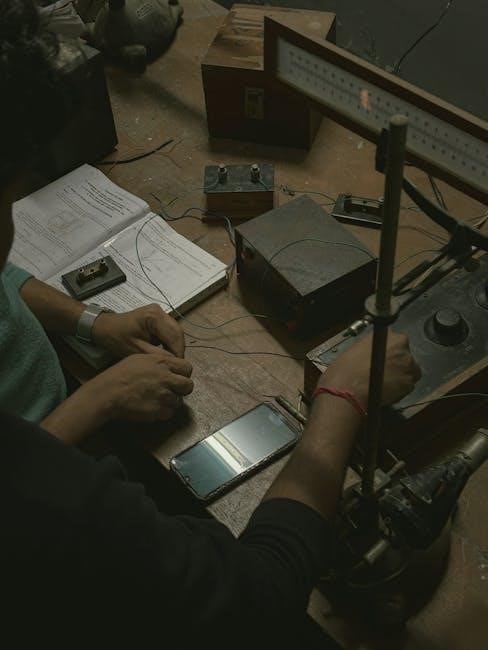
Procedure for Measuring Convex Lenses
Convex lens measurement requires careful alignment and adjustment of the lensometer’s sphere power knob, mirroring the focused resource allocation in fundraising.
Setting Up the Lensometer for Convex Lenses
Initial setup for convex lenses involves unlocking the instrument and setting the sphere power to zero. Ensure the lens is placed securely on the lens rest, with the convex surface facing the optical system. Adjust the eyepiece to achieve a clear and focused view of the target.
Proper illumination is crucial; adjust the intensity for optimal visibility. The lensometer should be leveled to prevent inaccurate readings, much like a balanced fundraising strategy. Confirm the vertex distance is correctly set, typically at a standard 14mm, before proceeding with alignment.
Aligning the Optical Center
Precise alignment is paramount. Rotate the lens until distinct stigmatic points – two clear, opposing dots – appear in the viewing field. Utilize the X and Y knobs to perfectly center these points, ensuring they are symmetrical and sharply defined. This indicates the optical center is aligned with the lensometer’s optical axis.
Maintaining this alignment, similar to focusing fundraising efforts, is vital for accurate power measurement; Any deviation introduces error. Consistent practice refines this skill, leading to reliable and repeatable results.
Reading the Sphere Power
Observe the scale through the viewing lens while maintaining a clear focus. The sphere power, indicated in diopters, is directly read from the scale. For convex lenses (plus power), the value will be positive; for concave lenses (minus power), it will be negative.
Similar to tracking fundraising progress, precise reading is crucial. Note the entire number and any decimal component. Repeat the measurement several times to confirm consistency, minimizing potential errors and ensuring accurate prescription verification.
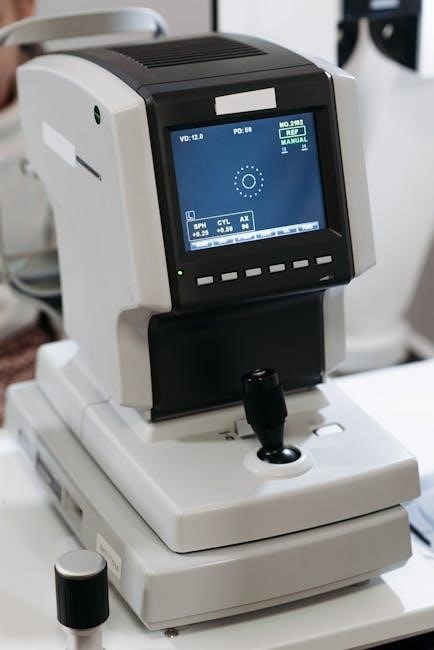
Procedure for Measuring Concave Lenses
Accurate assessment of concave lenses requires careful attention to detail, much like strategic resource allocation in fundraising initiatives for maximum impact.
Setting Up the Lensometer for Concave Lenses
Preparing the lensometer for concave lens measurement involves a distinct setup compared to convex lenses. Initially, ensure the instrument is properly leveled and illuminated; Rotate the sphere power dial to the minus range, typically beyond zero.
Introduce the concave lens into the lens holder, ensuring secure placement. Adjust the eyepiece to achieve a clear and focused view of the target. Unlike convex lens setup, anticipate a virtual focus; the image will appear to originate from the lens. This initial configuration is crucial for accurate power determination.
Identifying the Apex of the Lens
Accurate apex identification is paramount when measuring concave lenses. The apex represents the thinner central point of the lens, crucial for correct alignment within the lensometer. Visually inspect the lens; concave surfaces curve inward, converging towards this apex.
Properly orienting the lens with the apex facing the optical system ensures accurate readings. Misidentification leads to reversed power values. Utilize good lighting and a stable hand to discern the apex clearly, avoiding parallax errors during this critical step in the measurement process.
Reading the Sphere Power (Concave)
With the concave lens properly aligned, observe the lensometer scale. Concave powers are indicated by negative dioptric values. Adjust the sphere knob until a clear, focused target image is achieved. The scale reading at this point represents the sphere power of the lens.
Remember to note the negative sign, signifying a diverging lens. Precise adjustments are vital for accurate readings. Double-check the alignment and scale observation to minimize errors and ensure reliable sphere power determination.
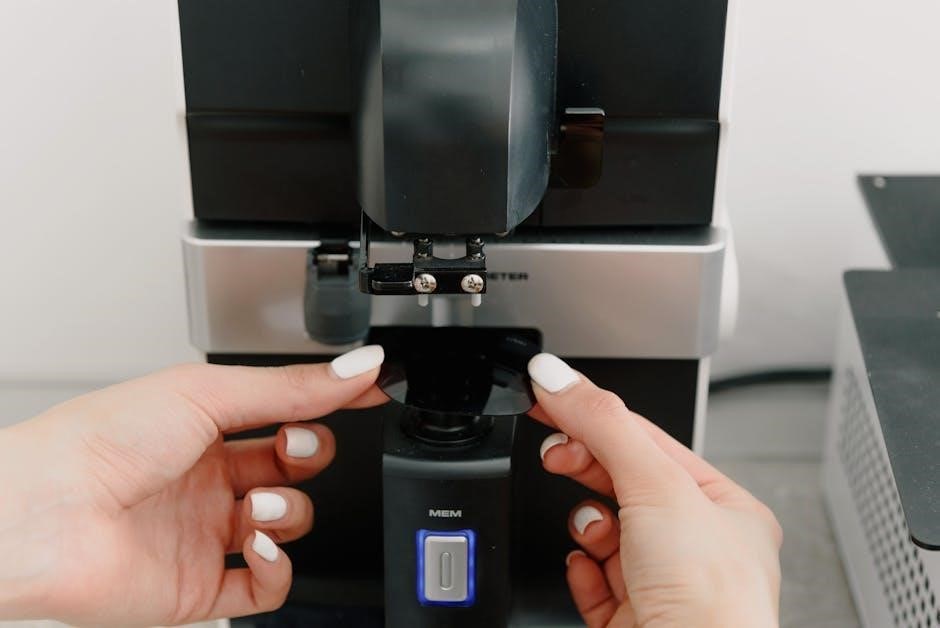
Measuring Cylindrical Lenses
Fundraising’s strategic approach parallels identifying cylinder axis and power; both require careful analysis and precise adjustments for optimal outcomes and clear vision.
Identifying the Cylinder Axis
Like a successful fundraising campaign targeting specific donor segments, pinpointing the cylinder axis demands methodical technique. Rotate the lens within the lensometer while observing the streak formed by the cylindrical power.
The axis is located at the point where the streak appears darkest and most defined – essentially, the point of minimal distortion. Precisely align this darkest point with the lensometer’s axis scale. Accurate axis determination is crucial, as even slight errors significantly impact visual acuity, mirroring the impact of misdirected fundraising efforts.
Adjusting for Cylinder Power
Similar to diversifying fundraising streams, adjusting for cylinder power requires careful manipulation of the lensometer’s cylindrical power knob. Once the cylinder axis is identified, slowly increase the cylinder power until the streak’s clarity maximizes.
Observe for any distortion or doubling of the streak; this indicates overcorrection. Fine-tune the adjustment for optimal clarity, mirroring the precision needed to cultivate donor relationships. Accurate cylinder power measurement ensures comfortable and effective vision correction.
Combining Sphere and Cylinder Readings
Just as a successful fundraising campaign blends diverse strategies, combining sphere and cylinder readings provides a complete lens prescription. Record both the sphere (spherical correction) and cylinder (astigmatic correction) values, alongside the cylinder axis.
This combined notation accurately describes the lens power needed for clear vision. Precise recording, like meticulous donor tracking, is crucial. Understanding this interplay ensures accurate lens fabrication and optimal visual acuity for the patient;
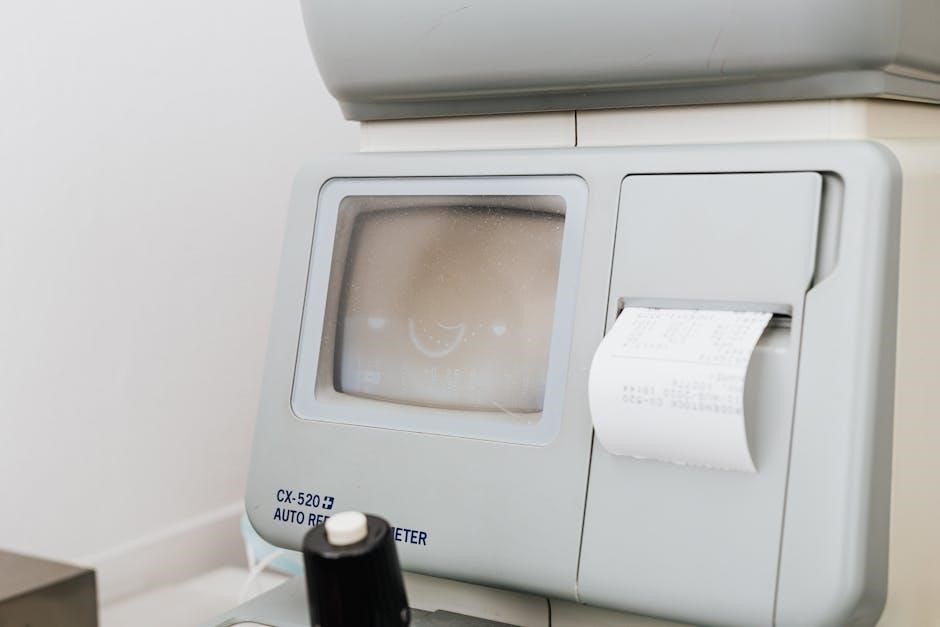
Astigmatism and Lensometry
Like diverse fundraising streams, astigmatism requires careful lensometry to identify principal meridians and accurately correct varying refractive powers for clear vision.
Understanding Principal Meridians
Principal meridians are crucial in astigmatism assessment via lensometry, representing the lines of least and greatest refractive power of the cornea or lens. Identifying these meridians accurately is paramount for prescribing cylindrical lenses that correct vision distortion.
During manual lensometry, the Jackson cross cylinder helps locate these points by neutralizing the astigmatism in each meridian. Understanding their relationship allows for precise cylinder power and axis determination, mirroring the strategic allocation of resources in fundraising for maximum impact. Accurate meridian identification ensures optimal visual acuity.
Jackson Cross Cylinder Use in Lensometry
The Jackson cross cylinder is indispensable for refining astigmatism measurements during manual lensometry. It introduces plus and minus cylinder power simultaneously, allowing precise neutralization of astigmatic error along specific meridians.
By rotating the cylinder, the optician locates the axis where astigmatism is minimized, indicating the cylinder axis of the lens. This process, akin to strategic resource allocation in fundraising, demands careful adjustment and observation. Correct use ensures accurate cylinder power and axis determination for optimal vision correction.
Compensating for Lens Distortion
Lens distortion, stemming from manufacturing imperfections or lens design, can introduce inaccuracies during manual lensometry. Opticians must recognize and compensate for these distortions to ensure precise measurements. Careful observation of target distortion—blurring or warping—guides necessary adjustments.
Similar to adapting fundraising strategies to changing donor behaviors, lensometry requires flexibility. Utilizing the lensometer’s adjustments, particularly the spherical and cylindrical controls, minimizes distortion’s impact, yielding reliable sphere, cylinder, and axis values for accurate prescription verification.

Common Errors in Manual Lensometry
Like adapting fundraising to donor shifts, lensometry demands vigilance; parallax, vertex distance, and contamination significantly impact readings, requiring careful correction.
Parallax Error and Correction
Parallax error occurs when the operator’s eye isn’t precisely aligned with the lensometer’s optical axis during measurement, leading to inaccurate readings. This misalignment creates a perceived shift in the lens’s position, falsely altering the sphere and cylinder power values. To minimize parallax, maintain a consistent and centered viewing position, ensuring your pupil aligns with the designated viewing aperture.
Proper head positioning and consistent distance from the eyepiece are crucial. Regularly check alignment using the instrument’s internal reference points. Correcting parallax involves re-centering your eye and repeating the measurement until a stable, repeatable reading is obtained, much like refining a fundraising strategy based on donor feedback.
Incorrect Vertex Distance
Vertex distance, the distance between the lensometer’s reference point and the lens’s surface, significantly impacts power measurements. Manual lensometers are calibrated for a standard vertex distance, typically 12mm. Deviations from this standard, whether closer or further, introduce errors, particularly with higher-powered lenses.
Adjusting for vertex distance is crucial for accurate readings, mirroring the need to adapt fundraising appeals to different donor segments. While some lensometers offer vertex distance compensation, manual adjustments require understanding the power change per millimeter of deviation. Always verify the lensometer’s calibration and maintain consistent measurement practices.
Lens Contamination and its Impact
Lens surfaces, like fundraising databases, require meticulous upkeep. Dust, fingerprints, or cleaning solutions can dramatically affect lensometry readings, introducing inaccuracies similar to flawed donor data. Even seemingly minor contamination alters light transmission, skewing power measurements and potentially leading to incorrect prescriptions.
Regular cleaning with appropriate lens cleaning solutions and microfiber cloths is essential. Inspect lenses carefully before each measurement, ensuring a pristine surface. Ignoring contamination compromises the reliability of the entire process, mirroring the importance of data integrity in successful fundraising.

Lensometry for Different Lens Types
Adapting techniques for progressive, bifocal, and contact lenses requires specialized approaches, much like tailoring fundraising strategies to diverse donor segments.
Progressive Lenses – Measurement Challenges
Measuring progressive lenses with a manual lensometer presents unique difficulties due to their varying powers across the lens surface. Unlike single-vision lenses, a single reading doesn’t define the entire prescription. Technicians must carefully identify the distance, intermediate, and near power zones, often requiring multiple measurements and adjustments.
Accurate alignment with the corridor is crucial, and parallax errors are easily introduced. The progressive addition and corridor width significantly impact the reading, demanding meticulous technique. Furthermore, understanding how fundraising principles adapt to different donor segments mirrors this complexity.
Bifocal Lenses – Segment Height and Power
Bifocal lensometry requires determining both the distance and segment powers, alongside precise segment height measurement. The lensometer must be adjusted to view through the near segment, noting the power change. Accurate segment height is vital for proper binocular vision and reading comfort, influencing the lens fitting.
Similar to adapting fundraising strategies to diverse donor profiles, bifocal measurement demands a tailored approach. Incorrect readings can lead to visual discomfort, highlighting the need for careful technique and understanding of lens design principles.
Contact Lens Power Verification
Contact lens power verification using a lensometer involves placing the lens on a specialized contact lens holder. The instrument then measures the power as if the lens were in the eye, accounting for tear film and corneal influence. This differs from spectacle lensometry, requiring careful alignment and consideration of base curve effects.
Just as fundraising requires adapting to evolving donor preferences, contact lens verification demands precision and understanding of individual physiological factors for optimal vision correction.

Advanced Lensometry Techniques
Like successful fundraising strategies, advanced lensometry blends subjective refraction correlation with troubleshooting readings and meticulous instrument maintenance for optimal results.
Subjective Refraction Correlation
Correlating manual lensometry findings with subjective refraction is crucial for verifying accuracy and achieving optimal patient outcomes. Lensometry provides an objective measurement of the eye’s refractive error, establishing a baseline for further refinement. Subjective refraction, however, incorporates the patient’s visual perception and comfort.
Discrepancies between objective and subjective findings necessitate careful investigation, potentially indicating issues with lensometer technique, patient responses, or underlying ocular conditions. A skilled practitioner integrates both methods, utilizing patient feedback to fine-tune the prescription and ensure clear, comfortable vision, much like a successful fundraising campaign adapts to donor feedback.
Troubleshooting Lensometer Readings
Inconsistent lensometer readings demand systematic troubleshooting. First, verify proper instrument calibration and ensure a stable power source. Examine the lens for cleanliness – smudges or scratches significantly impact accuracy. Confirm correct lens orientation and alignment within the lens holder.
If discrepancies persist, reassess vertex distance and parallax error. Consider the possibility of lenticular distortion or prism. Just as fundraising requires adapting to changing donor behaviors, lensometry demands meticulous attention to detail and a methodical approach to problem-solving for reliable results.
Maintaining and Calibrating a Lensometer
Regular maintenance is crucial for lensometer accuracy. Dust optical components frequently with a blower, avoiding abrasive cleaners. Periodically check calibration using known standard lenses, comparing readings to established values. Lubricate moving parts as recommended by the manufacturer to ensure smooth operation.
Similar to a nonprofit’s need for consistent financial oversight, meticulous calibration and upkeep guarantee reliable measurements. Document all maintenance and calibration procedures, mirroring best practices in fundraising accountability, for traceable and dependable results.